
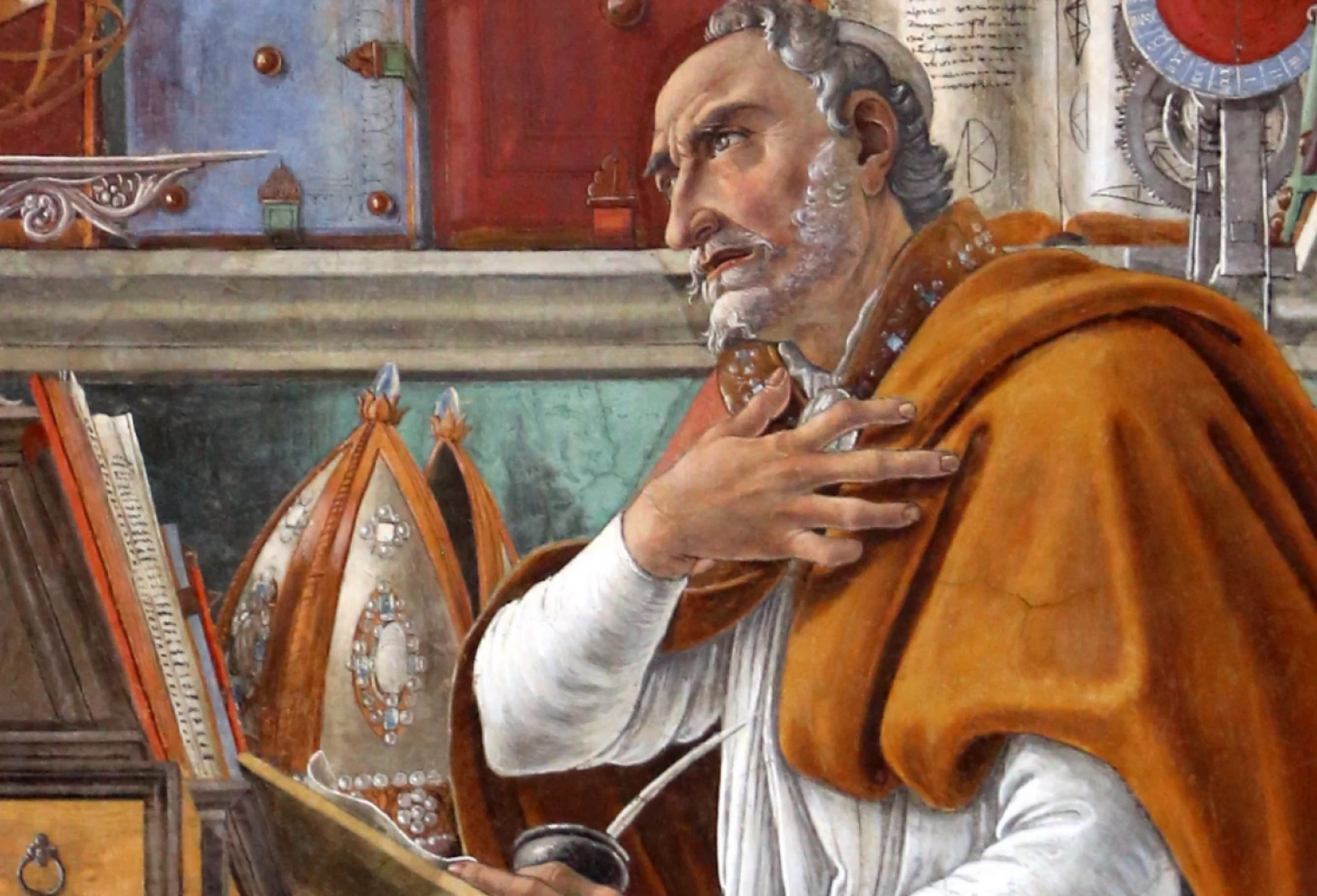
"Augustine is important because, more than anyone else in church history before or since, he related the entirety of the human condition to the reality of God. Augustine possessed a fertile and copious intellect which he applied to the most difficult questions in theology. But what marks him out most distinctly is his appreciation of the role of desire in the knowledge of God. For Augustine, at the heart of the human condition is longing, a yearning for a kind of joy that nothing our senses perceive can offer us. Augustine’s insight is that this longing can only be satisfied because, in his grace, the intangible and invisible God has condescended to us in tangible and visible form through the Lord Jesus Christ. Augustine, therefore, offers perennially fresh insight into how this grace meets, restores and transforms, not only our desires, but with them our whole human condition."
Dr Graham Shearer, Lecturer in Theology
"Augustine is important because of his understanding of human history. The City of God offers a linear reading of history in which, despite much suffering in this world, the people of God will experience true bliss in the end. Augustine’s thinking, expressed in that text, was foundational for subsequent interpretations of the nature of history and the work of God in it."
Dr Matthew Houston, Lecturer in Church History
"Augustine is important because he was a great trophy of divine grace. In his own words in his Confessions the fruit of God’s grace in the lives of men and women is that in ‘seeking him they find him, and in finding they will praise him.’ And the remarkable thing about the work of grace in Augustine’s life was that it not only transformed him, but generations that followed him."
Professor Michael McClenahan, Principal & Professor of Systematic Theology