

Open any English Bible at the New Testament and you always find the same little library of twenty-seven books, in this order: four Gospels and Acts, thirteen Pauline Letters, eight Catholic Epistles and the Book of Revelation.
But how did this stable collection come about – how did this ‘Canon’ of writings, forming our New Testament, develop or its twenty-seven books come to be regarded as authoritative Scripture? What surviving manuscript evidence and other documents, from early centuries, account for our New Testament’s origins, growth or fixed state? Does all of this establish its trustworthiness? And should we still attach significance or value to our New Testament today?
All these questions have been asked over and over again, within academic theology or in the Church. Yet still in 2026, a consensus on their answers proves elusive, with rigorous investigation continuing into the complex factors that shaped the Canon. Fancy a deep dive into these questions? If so, you should check out a new book of essays – The New Testament Canon in Contemporary Research – just published by Brill, in the series Texts and Editions for New Testament Study: you can find a copy in the College’s Gamble Library (BS2325 P848).
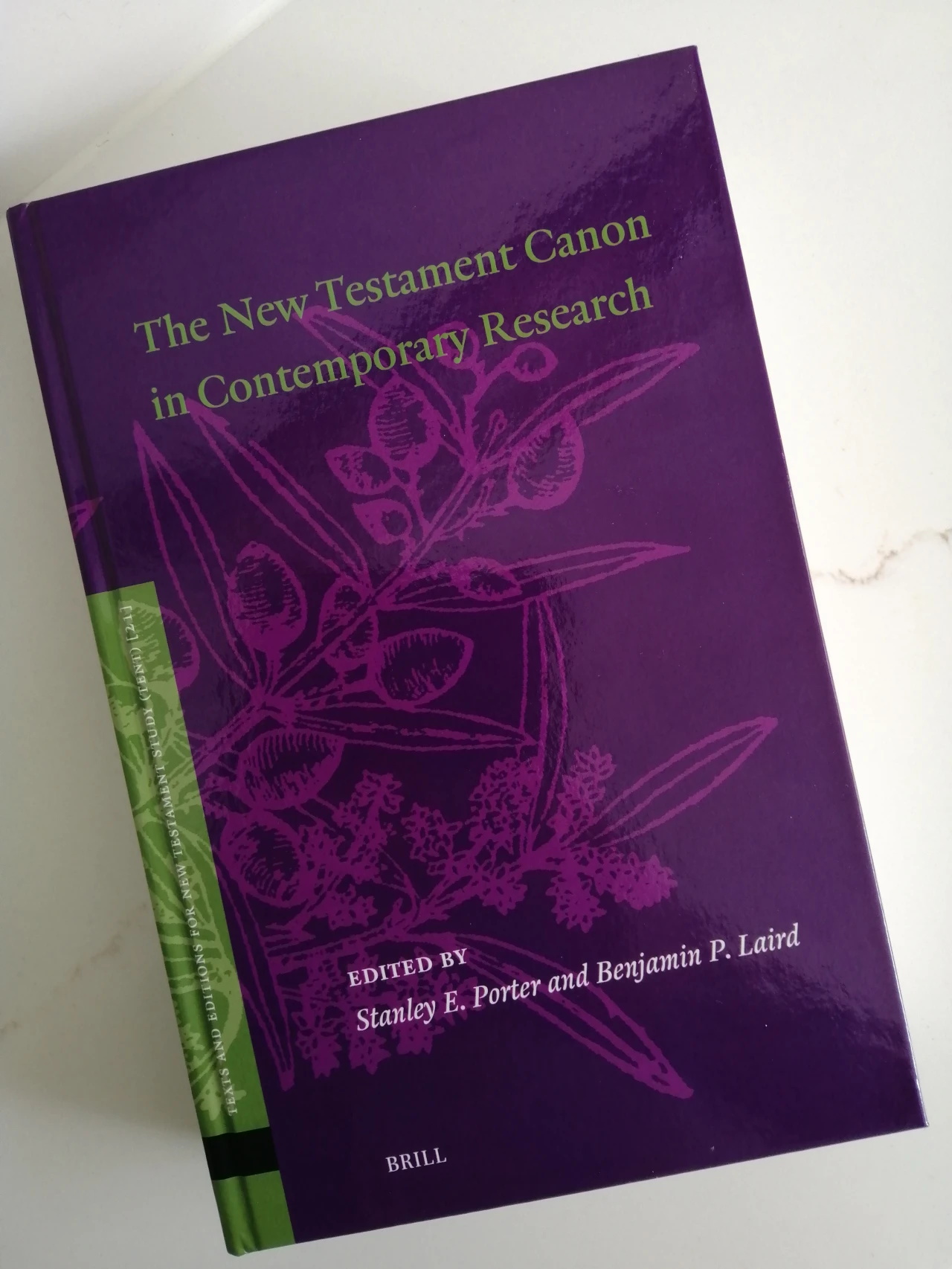
The volume aims to provide a comprehensive, in-depth evaluation of the New Testament Canon. It unpacks all major relevant aspects of the New Testament’s formation, contents and supporting ancient documentary evidence (or witnesses). Explaining its formation involves coverage of the conditions and contexts that impacted the New Testament’s growth. Describing its contents requires detailed reconstruction of how each New Testament book or section achieved its canonical recognition. And examination of supporting witnesses calls for attention both to surviving ancient manuscripts for the New Testament texts and to other Christian writings that attest their early use and influence.
The book’s contributors are an international group of twenty-three scholars from a range of backgrounds and with contrasting perspectives. All of them either specialists in Canon Studies generally or in the interpretation of individual books or sections of the New Testament literature. Their mix of views and approaches illustrates current debates about the Canon, giving a hearing to disparate voices and presenting varying assessments of the issues.
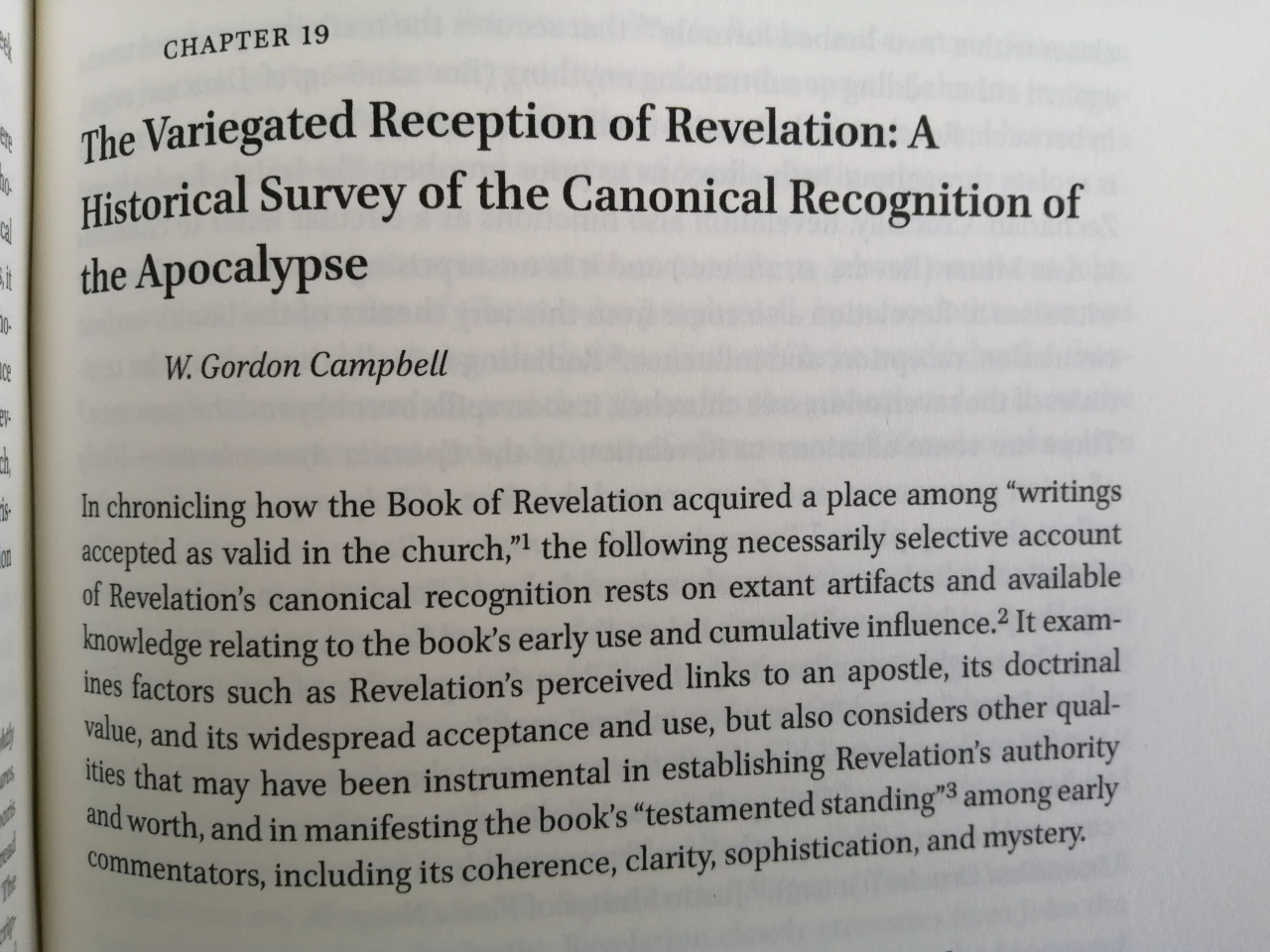
Some Reformed perspectives are featured, including my own on the Book of Revelation. In my essay, I chart Revelation’s particular road to very early and secure canonical status in both the Western/Latin and Eastern/Greek Churches, as well as inquiring into the circumstances in the Greek East that produced a later wobble over its value. A counterpoint is provided in an accompanying essay, by an Orthodox scholar who concentrates on the rockier road of Revelation’s fortunes in the Eastern Church and who gives readers a somewhat different explanation of its canonical fortunes.
Of course, there are twenty-six other New Testament books than the one that has most fascinated and occupied me, each with its own peculiar journey towards a settled place, whether core or fringe, within our New Testament Canon: so, there is plenty here to explore!